Physical Address
304 North Cardinal St.
Dorchester Center, MA 02124
Physical Address
304 North Cardinal St.
Dorchester Center, MA 02124
The modern enterprise technology landscape is undergoing a fundamental structural transition. For decades, software engineering relied on deterministic paradigms, where developers wrote explicit, rule-based instructions to govern computational inputs and outputs. While deterministic systems remain the baseline for transactional processing, database administration, and basic web infrastructure, they struggle to address non-linear problem domains such as natural language comprehension, computer vision, predictive maintenance, and complex decision automation. The emergence of production-grade machine learning and deep learning architectures has replaced manual conditional logic with statistical inference models capable of identifying multi-dimensional patterns within unstructured datasets.
This paradigm shift requires a comprehensive re-evaluation of how software systems are designed, deployed, monitored, and maintained. Building artificial intelligence into enterprise operations involves much more than training a standalone neural network or integrating an external application programming interface. It demands a holistic engineering discipline encompassing data pipeline orchestration, high-performance computing management, continuous model validation, and robust ethical governance. Understanding the structural mechanics of modern AI systems allows technical leaders to transition from speculative experimentation to scalable, resilient software architecture.
Traditional software applications operate on a predictable input-process-output pipeline governed by procedural or object-oriented codebases. In this deterministic model, business logic is hardcoded by software engineers based on explicit domain rules. If a business process changes or encounters an unmodeled edge case, developers must manually update the source code, conduct regression testing, and deploy a software patch. This model excels at tasks requiring mathematical precision and rule enforcement, but it breaks down when applied to vast, dynamic, or highly ambiguous real-world data streams.
In contrast, artificial intelligence systems rely on probabilistic modeling. Rather than executing pre-defined rules, machine learning algorithms process historical or real-time training data to derive mathematical relationships between feature vectors and target outcomes. The resulting software artifact—a trained model parameter set—functions as an inferential engine capable of generalizing across unseen inputs. This transition from explicit programming to statistical learning requires fundamental adjustments to system architecture, shifting engineering priorities from static code maintenance to continuous data management, parameter tuning, and dynamic model monitoring.
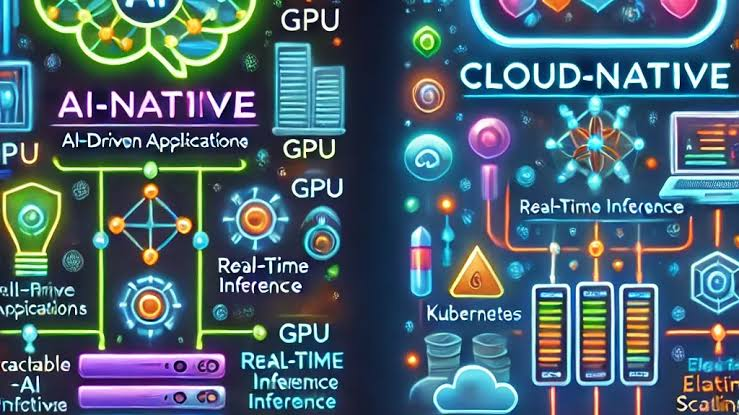
Furthermore, contemporary software systems are increasingly adopting hybrid or AI-native topologies. In a hybrid architecture, traditional microservices manage deterministic tasks such as user authentication, billing, and record storage, while specialized AI microservices handle non-linear operations like recommendation generation, anomaly detection, or dynamic resource allocation. In contrast, fully AI-native architectures position statistical inference engines as the primary orchestration layer, routing user queries, managing system states, and dynamically synthesizing code or responses based on contextual understanding.
To effectively design scalable intelligence systems, organizations must understand the distinct sub-disciplines that constitute modern artificial intelligence. Machine learning serves as the foundational umbrella, encompassing supervised, unsupervised, and reinforcement learning paradigms. Supervised learning algorithms adjust internal weights based on labeled training pairs, making them highly effective for classification and regression tasks in financial forecasting, medical diagnostics, and risk assessment. Unsupervised learning algorithms identify latent structures within unlabeled data, enabling advanced customer segmentation, anomaly detection, and dimensionality reduction. Reinforcement learning models optimize decision-making strategies through reward-based environmental feedback loops, playing a central role in autonomous robotics, algorithmic trading, and dynamic supply chain logistics.
Deep learning represents a specialized branch of machine learning that utilizes artificial neural networks with multiple hidden layers to extract hierarchical feature representations directly from raw inputs. Convolutional neural networks revolutionized computer vision by applying spatial filtering matrices to image and video data, allowing systems to perform automated visual inspection, facial recognition, and spatial mapping. Transformer architectures, characterized by self-attention mechanisms, transformed natural language processing by modeling contextual relationships across long sequential data streams without the parallelization limits of legacy recurrent networks.
Generative AI builds upon transformer and diffusion model foundations to synthesize original content, including natural text, structural code, synthetic audio, and photorealistic imagery. Large language models utilize vast tokenized corpora to perform multi-step reasoning, semantic search, and dynamic workflow execution. Mastering these underlying mathematical frameworks enables software architects to select the appropriate model family for specific operational constraints rather than applying monolithic solutions indiscriminately.
An artificial intelligence model is fundamentally a reflection of the data used to construct it. Consequently, the primary determinant of production AI performance is not the complexity of the underlying algorithm, but the quality, volume, and latency of the supporting data infrastructure. Enterprise data architectures must evolve from passive relational databases into dynamic, high-throughput data engineering platforms capable of serving both offline training requirements and online low-latency inference demands.
The data engineering lifecycle begins with ingestion and aggregation across distributed sources, including operational databases, third-party application programming interfaces, cloud storage buckets, and Internet of Things telemetry streams. Once collected, raw data must undergo extensive cleaning, deduplication, schema normalization, and validation. For supervised learning tasks, data labeling pipelines—combining automated programmatic weak supervision with human-in-the-loop review—are established to construct structured training sets.
Modern enterprise AI platforms rely on specialized data management abstractions, such as feature stores and vector databases. Feature stores maintain a single source of truth for computed machine learning variables, ensuring mathematical consistency between offline model training and real-time online inference while preventing training-serving skew. Vector databases store high-dimensional mathematical embeddings generated by deep learning models, enabling instantaneous semantic similarity searches and retrieval-augmented generation architectures that ground large language models in enterprise-specific knowledge repositories.
Executing a successful enterprise AI initiative requires a systematic development lifecycle that bridges exploratory data science with rigorous software engineering. The process initiates with problem formulation and feasibility analysis, where business objectives are mapped onto quantifiable machine learning metrics, such as precision, recall, mean absolute error, or latency budgets. During this phase, technical teams evaluate baseline datasets to verify whether sufficient signal exists to justify model development.
Once feasibility is confirmed, engineers proceed to data preparation, model selection, and iterative training. Machine learning models are trained using distributed compute clusters, utilizing graphic processing units or tensor processing units to accelerate matrix multiplication operations. Hyperparameter optimization frameworks systematically search parameter spaces to fine-tune model accuracy while preventing overfitting. When evaluating organizational readiness for digital transformation, partnering with a specialized AI software development company enables enterprises to systematically assess infrastructure constraints, design bespoke neural network architectures, and establish automated deployment pipelines.
The transition from a validated experimental model to a production software asset requires implementing Machine Learning Operations, commonly known as MLOps. MLOps extends traditional DevOps practices by introducing continuous integration and continuous delivery workflows designed specifically for non-deterministic software artifacts. Automated MLOps pipelines govern model versioning, containerized deployment, performance benchmarking, and automated retraining triggers. Once deployed to production environments via REST or gRPC microservices, models must be monitored continuously for performance metrics, system latency, and data drift—a phenomenon where shifts in real-world environmental conditions degrade model predictive accuracy over time.
As artificial intelligence systems assume operational control over high-consequence domains such as credit scoring, medical triage, employment screening, and autonomous transport, the technical imperatives of ethical governance and risk mitigation become paramount. Unlike transparent deterministic software, complex deep learning models frequently operate as black boxes, making it difficult to trace the precise internal mathematical logic that produces a given output. This opacity introduces structural risks, including algorithmic bias, hallucinations, intellectual property exposure, and security vulnerabilities.
Addressing algorithmic bias requires rigorous data auditing protocols during the pre-processing phase. Training datasets must be analyzed for historical disparities, demographic imbalances, and latent proxy variables that could lead to discriminatory outcomes. Explainable AI techniques, such as feature attribution modeling and partial dependence plots, allow engineers to interpret internal decision pathways, providing auditability for regulatory compliance frameworks.
Cybersecurity paradigms must also adapt to address unique AI attack vectors. Adversarial attacks involve introducing subtle, imperceptible noise to input data to deceive computer vision or classification models. Data poisoning attacks compromise training pipelines by injecting corrupted samples to degrade downstream model integrity. In generative systems, prompt injection attacks manipulate language model instructions to bypass safety guardrails or extract confidential data. Robust AI engineering requires deploying real-time input sanitization layers, output validation filters, and strict zero-trust access controls across the entire machine learning infrastructure.
The ultimate value of artificial intelligence lies in its ability to interface smoothly with existing business infrastructure, transforming legacy software investments into intelligent operational assets. Many established organizations operate core transactional workloads on legacy enterprise resource planning platforms, mainframes, or monolithic web application backends. Rip-and-replace strategies are rarely viable due to extreme cost, operational risk, and systemic disruption.
A sustainable integration strategy utilizes event-driven API gateways and asynchronous message queues to decouple intelligent microservices from core operational databases. By streaming real-time event logs into centralized message brokers, machine learning models can consume operational data, execute real-time inference, and write predictions back into corporate dashboards without introducing synchronous latency to core transactional pipelines.
An artificial intelligence system is only as valuable as the underlying architecture that supports it—bridging the gap between probabilistic model outputs and mission-critical enterprise infrastructure requires deliberate engineering, rigorous data hygiene, and end-to-end MLOps execution. To transform complex AI models into scalable, high-performance business applications, organizations can partner with The DIGIT to engineer custom AI software, build robust data engineering pipelines, and deploy secure enterprise solutions that drive long-term digital growth and operational performance.