Physical Address
304 North Cardinal St.
Dorchester Center, MA 02124
Physical Address
304 North Cardinal St.
Dorchester Center, MA 02124
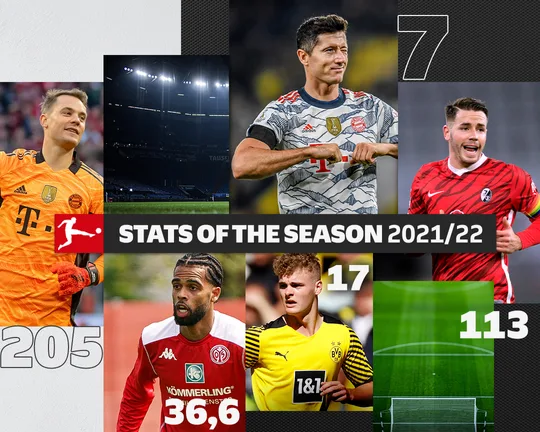
Selecting matches to bet on a total of exactly 3–4 goals in the 2021/22 Bundesliga only makes sense if it is grounded in how the league actually produced scorelines. With 954 goals in 306 matches—an average of 3.12 per game—Germany’s top flight naturally clustered a large share of results in the 3–4 goal band, but that clustering was stronger for certain team profiles and matchups than for others, which is where disciplined bettors can construct a method rather than rely on intuition alone.
A 3–4 total‑goal bet effectively targets the “middle” of a high‑scoring distribution: games that are not goalless or crazy 5–4 outliers but still reflect the league’s attacking nature. In 2021/22, the Bundesliga’s average of 3.12 goals per match exceeded three goals per game and outperformed other top‑five European leagues, confirming that 2–1, 2–2 and 3–1‑type scorelines were structurally common rather than exceptional. This baseline makes the 3–4 band especially attractive in Germany, because the average match gravitates toward that range more often than in leagues where 1–0 and 2–0 are dominant outcomes.
To target a narrow total‑goal band, you need to know roughly how the distribution of outcomes behaves, not just the mean. Over/under tables compiled from Bundesliga data show that around 64% of matches went over 2.5 goals, while over‑3.5 hit less frequently—leaving a sizeable slice of games with exactly 3 or 4 goals. In practice, a large portion of German fixtures fell into common mid‑range scorelines (2–1, 2–2, 3–1) that comfortably land inside a 3–4‑goal bet even though they differ in competitive narrative.
The critical implication is that the 3–4 band benefits from both sides of the distribution: matches that just creep over traditional 2.5 lines and those that stop short of outlier 4–3 or 5–2 results. Bettors who understand this positioning can exploit situations where teams are strongly biased toward “normal” high scoring rather than either extreme defensive shut‑outs or wild shootouts.
Looking at team‑level numbers helps illustrate which archetypes repeatedly generated the most 3–4 goal contests in 2021/22. Over‑2.5 tables show that Bayern had an over‑2.5 percentage of around 94%, with clubs like Stuttgart and Hoffenheim also posting very high rates, confirming that their games frequently ended in multi‑goal scenarios. However, while Bayern’s matches sometimes exploded into 5–0 or 7–0 extremes, many fixtures between strong attacks and mid‑table opponents settled at 3–0, 3–1 or 2–1, i.e. right in the 3–4 total‑goal window.
By contrast, lower‑tempo or defensive‑minded sides produced more 0–0, 1–0 or 2–0 outcomes, which either miss the band from below or only just touch its threshold. Conceptually, the 3–4 sweet spot is most often hit by:
The mechanisms behind these patterns follow clear cause–effect lines. A dominant attack with a functioning defence tends to score two or three goals without conceding many, producing 3–0 or 3–1 finishes more often than 5–2 blowouts unless the underdog completely falls apart. Meanwhile, when two similarly matched, high‑tempo mid‑table sides meet, they usually create enough chances for both to score without either having the efficiency or sustained dominance to drive totals into the 5+ range; this often results in 2–1 or 2–2, which sit comfortably within the band.
To choose fixtures in a structured way, bettors can use a multi‑step filter that narrows down from league context to specific match conditions. The aim is to avoid both low‑event and extreme blowout scenarios, leaving a core of matches where 3–4 goals are statistically plausible and tactically logical.
A practical pre‑match sequence might look like this:
This sequence filters out edges cases and leaves a smaller subset of matches where structural factors naturally converge around three or four total goals rather than skewing toward either extreme of the scoring spectrum.
When someone wants to test that filter across an entire season, the ability to track odds, winners and closing lines in one place becomes important. Under those conditions, using ufabet ดีที่สุด as a recurring operational base can support more rigorous evaluation: by systematically logging 3–4‑goal selections on Bundesliga fixtures alongside prices and final totals, a bettor can later audit whether this structured filter actually beats generic totals strategies or simply mirrors the league’s general scoring tendency without outpacing the market.
Beyond narrative filters, some bettors formalise their approach through checklist‑style tools that translate statistics into categories. A simplified conceptual list for 3–4‑goal suitability might assign each match a rating on factors such as:
If a fixture consistently shows high BTTS, frequent 2–1 or 2–2 results and modest over‑3.5 rates, it earns a higher “3–4‑goals” rating than matches where a big favourite tends either to win 5–0 or grind out 1–0s. The point is not precision forecasting but steering selection toward the thickest part of the goal‑count distribution rather than its tails.
Because 3–4 total‑goal bets sit between standard 2.5 and 3.5 lines, it helps to compare their logical base with ordinary totals. Over/under tables and historical price logs show that while over‑2.5 in the 2021/22 Bundesliga cashed in roughly 64% of matches, a meaningful subset of those finished with exactly three or four goals, meaning a 3–4 band bet would have captured them as well while excluding extreme goal fests.
| Market type | Captures which outcomes? | Strength in Bundesliga 2021/22 context | Main trade‑off |
| Over 2.5 goals | 3+ goals | Benefits from 3.12 goals/game environment | Vulnerable to low odds and matches that stay at 2 goals |
| 3–4 total goals | Exactly 3 or 4 goals | Aligns with common scorelines like 2–1, 3–1, 2–2 | Loses on both low (≤2) and extreme high (≥5) totals |
| Over 3.5 goals | 4+ goals | Takes advantage of true shootouts | Misses all 3‑goal games, more variance and lower hit rate |
Interpreting this comparison makes clear that 3–4 bets are most logical when you neither expect a grind nor a blowout, but instead a “normal” high‑scoring Bundesliga match. This is particularly true when your model suggests a strong likelihood of both teams scoring and at least one side reaching two or three goals without the game being so imbalanced that 5–1 or 6–0 become realistic.
Certain contextual patterns in 2021/22 favoured mid‑range goal totals. For example, matchdays late in the season often combined strong attacking incentives with some defensive caution: teams chasing European places needed wins but still managed game risk, leading to scorelines such as 2–1 or 3–1 rather than all‑out basketball. Similarly, fixtures where both teams had functional but imperfect defences and above‑average attacks tended to produce steady scoring rather than chaotic collapses, again feeding into the 3–4 range.
On the other hand, matches involving a truly dominant attack against a disintegrating defence—like some of Bayern’s heaviest wins—were far less suitable, as they frequently ran beyond four goals total. Recognising this distinction allows bettors to avoid “obvious overs” that actually belong in 4.5‑goal territory and instead focus on more balanced contests where three to four goals are a natural equilibrium point.
There are clear scenarios where aiming for the 3–4 band becomes more guesswork than strategy. One is when tactical changes or injuries shift a team’s scoring profile abruptly—losing a key striker or centre‑back can pull expected totals away from prior patterns, making historical distributions less predictive. Another is extreme motivational states: some relegation battles become either wildly open or locked‑down, depending on the coach’s risk tolerance, so applying generic 3–4 logic without accounting for these edge conditions can misfire.
Weather, pitch conditions and fixture congestion also matter. Heavy pitches or tight travel schedules can dampen tempo, reducing the probability of reaching three goals, while certain end‑of‑season rounds historically produce unusually high totals as teams abandon caution. Ignoring these factors and treating the 3–4 band as a stable target across all matchdays risks overfitting a nice‑looking mid‑range to an environment that is more dynamic than it appears in aggregate statistics.
The 2021/22 Bundesliga’s 3.12 goals‑per‑game environment made 3–4 total‑goal bets structurally sensible, but only when aligned with team archetypes and match conditions that naturally cluster around mid‑range scorelines rather than extremes. By combining league‑wide data, over/under tables and tactical context, bettors can filter fixtures toward those where both attacks function, both defences are imperfect but not catastrophic, and motivations support a “normal” high‑scoring game rather than a deadlock or a rout. Used in this disciplined way—supported by clear checklists, tracked results and attention to when conditions break the pattern—the 3–4 band becomes a logical tool for exploiting the Bundesliga’s scoring profile rather than a speculative stab at the middle of the goal distribution.